My son has felt in the past and maybe still now that he didn’t grow up in a stable home. That he had to move a lot. That things weren’t steady. I have had to sit with that, longer than I want to admit, because hearing that did something to me that I’m still untangling, and the closest word I have for it is anger, though underneath the anger is something that hurts a great deal more.
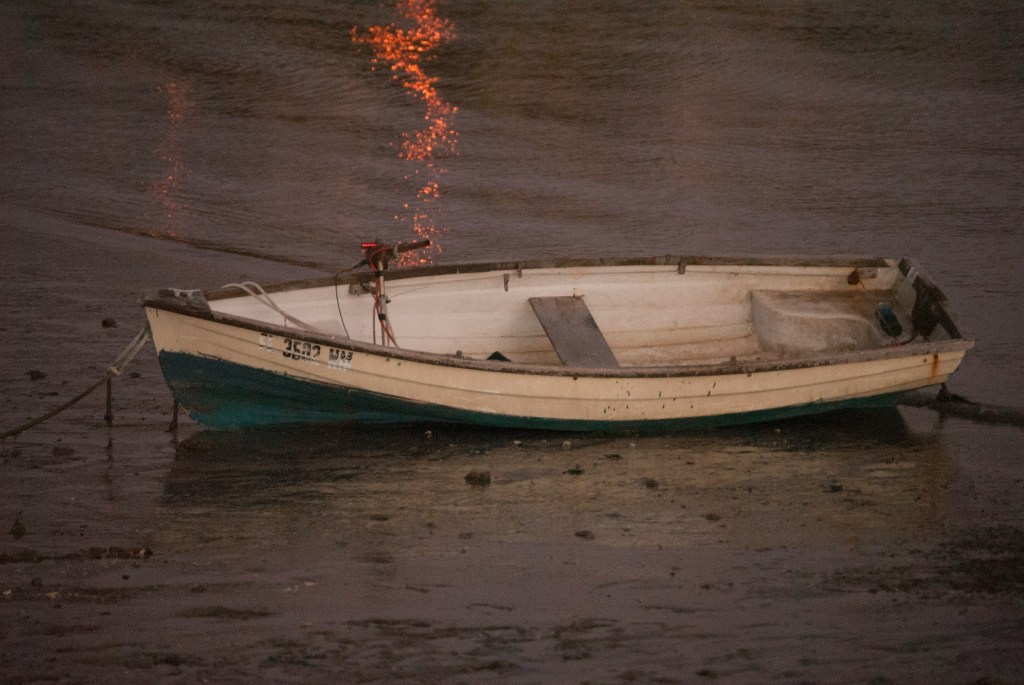
I was the stability. I know how that sounds against his memory, and I’m not trying to argue him out of what his childhood felt like from the inside. But I was there for all of it, and I know what I was doing every single day, and what I was doing was holding the boat. That’s the only way I can describe those years. I felt like I was standing in a small boat in very bad weather with both hands gripping the sides, and the water was cancer, twice, my health on the edge of something, and the courts, and having no money, and a man who kept losing jobs and losing housing, wave after wave of it, and my entire job, the whole of my existence in that era, was to keep that boat from tipping over with my children in it. And it did not tip over. That is not luck. That is not the situation somehow working itself out. That is me, bracing against every wave, for years, so that my kids could sit in the middle of the boat and stay dry enough to grow up.
So when the word that comes back to me is unstable, I feel something close to insulted, and I’ve had to be honest with myself about why. It’s because that word names the storm and leaves out the person who kept them alive inside it. It sees the water and not the hands. And I understand, I do, that a child can only see what a child can see. He felt the boat rock, because the boat did rock, violently, and no amount of my holding could make the water calm. He couldn’t see my arms straining. Kids never can. That’s almost the definition of childhood, being carried through something terrible by someone whose effort you won’t fully understand until you’re grown, if ever. But I need to say what I actually did, even if only here, even if he never reads it or never believes it.
I moved us a number of times, that part is true. But every single move, kept my children in the same school zone. That was my line. That was the thing I would not cross no matter how bad it got, because I knew that a kid can survive a lot if the one fixed point holds, if the school and the friends and the teachers stay the same while everything else shifts underneath. So I moved us to get closer to that school. I moved us to get more space so they could breathe. Only once, in the very worst year, did I have to move us somewhere that was a step down, and even that I clawed back from as fast as I could. The moves were not chaos. The moves were the opposite of chaos. They were me rearranging everything I could reach to protect the one thing a child needs most, which is the sense that the ground under their feet at school, at least, is not going anywhere. I was moving the boat on purpose, carefully, always keeping their anchor down. That is not instability. That is a mother doing work in the dark, every year, to keep her children’s world from coming apart.
The part that is grief and not anger, the part I’ve had to make a kind of peace with. I may never get credit for is the holding. The success of it is invisible. If I had failed, if the boat had gone over, he would know exactly what that looked like, because he’d have drowned in it. But I didn’t fail. I held. The reward for holding is that he remembers the water and not the hands, remembers the rocking and not the fact that it never once went under. That’s the loneliest thing about mothering through catastrophe. You do the invisible, back-breaking work of keeping the ground from swallowing your children, and if you succeed, they mostly remember that the ground shook.
It felt unstable to him and I’m sure his sisters, too, and that feeling is real and it’s his to name and I won’t take it from him. But I get to have my truth too, even if I only ever say it here. The home wasn’t unstable because of me. It survived because of me. I was the steady thing inside an unsteady world, the constant that did not leave, the one holding the sides of the boat while the storm did everything it could to take us down. I kept them in their school. I moved us up whenever I could. I stepped down only once and not for long. And I kept that boat from tipping over, for years, with everything I had, and the fact that they never knew how close the water came is not my failure. It might be my greatest success. I just had to be the one to say so, because no one else was ever going to see it. I saw it. I was there.


Leave a Reply