
My therapist said a thing to me once that reorganized my whole understanding of my life. She said that in most families, the structure quietly revolves around the mother. She’s the center of gravity, the sun the rest of the household orbits. And then she said that in a family like mine, it had revolved around the father instead.
I sat with that, and something that had never made sense suddenly did. Because for all the years of my marriage, and for a long time after, I had felt like an outsider in my own family. I couldn’t have told you why. I just knew that I was somehow not the center of the thing I had built my whole life around. And she’d just handed me the reason. The orbit was inverted. Everyone was circling him.
Everything revolved around his moods. Around whether he was okay. Around getting his approval, keeping his weather calm, anticipating what he needed before he needed it. The emotional temperature of the whole family was set by one person, and it wasn’t me. I was somewhere off to the side of it, watching the people I loved most arrange themselves around someone else’s gravity.
There isn’t a complaint about my children. It’s the opposite. Children orient themselves toward the loudest gravity in the house the way a plant leans toward light. They can’t help it and they shouldn’t be blamed for it. But the effect on me was that I became something other than the center. I became the backstop.
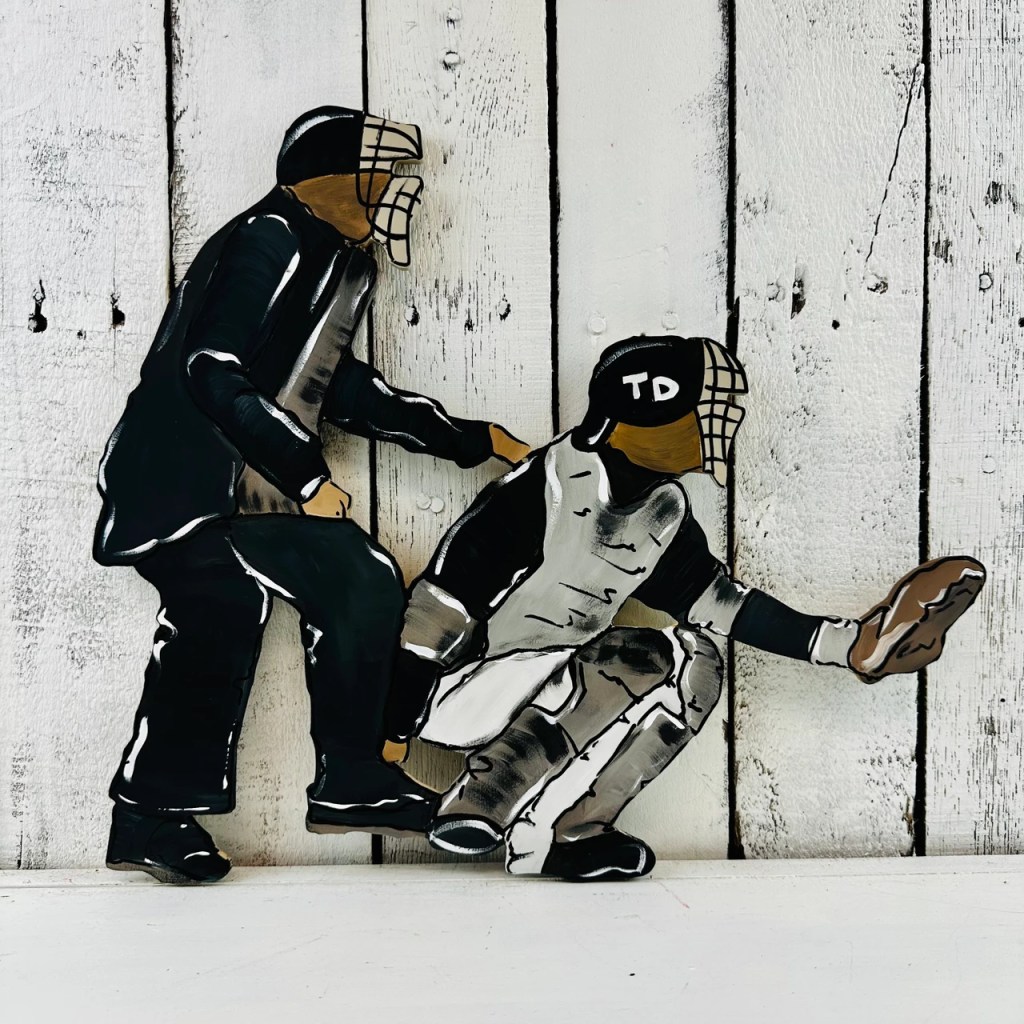
That’s the word I’ve landed on. The backstop. The one who stands at the back and fields whatever gets dropped. The one who catches the balls that roll past everyone else. I was essential, I was always there, I was never going anywhere, and precisely because of that, I was not the one anyone reached toward. You don’t reach toward the safety net. You just count on it to be there when you fall. That was my role. Necessary. Reliable. Peripheral.
There was always an air of poor dad. A sense that he was the one to be worried about, protected, made okay. And I was the fixed point in the background, holding the whole structure up, fielding what fell, present at the edge of a circle whose center was somebody else.
It made me feel defective as a mother. I would look at other mothers, friends whose kids were fiercely, openly loyal to them, mama’s boys and girls who oriented toward their mother like she was true north, and I would feel this quiet, corrosive sense that I had failed at something fundamental. My kids and I were close, we were always close, but close is not the same as being the one they revolved around, and I could feel the difference every single day. I did all of it, everything I’ve spent these pages writing down, and still I never got to feel like the primary parent. That was a specific and lonely kind of ache, and it was expensive in ways that don’t have a dollar figure.
There was a moment when all of this stopped being an abstract feeling and became the worst physical pain I have ever known. It was around the time a long court chapter was ending, and I had to drop my son off. I won’t lay out the circumstances, because they’re his and not mine to share. I’ll only tell you what it did to me. Handing him over, knowing that where he was going was where he wanted to be, broke something in me I didn’t know could break. I have survived cancer twice. I have survived things I’ve written about and things I never will. And I have never felt pain more primal than letting go of my child, because the letting go wasn’t just about that day. It was about the whole inverted orbit made suddenly, unbearably literal. He was choosing the center. And I was, once again, the backstop, standing at the edge, watching him go toward the gravity that wasn’t mine.
I have been an outsider before. My whole life, really. I was the quiet one, the one slightly apart, the one who never quite sat at the center of any circle she was in. And I think, without knowing I was doing it, I built a family hoping it would finally make me the center of something. A place where I belonged all the way in, not on the rim. And instead the family recreated the exact position I’d spent my entire life in. I married my way back into my oldest wound. The one place that was supposed to cure the outsider feeling made it permanent and gave it children.
I don’t have this one wrapped up. I want to be honest about that, because I’ve made a kind of peace with most of what I’ve written here, and this is the one I haven’t. This is the one that still lives in me. I understand it now, thanks to my therapist, in a way I didn’t before. I know the orbit was inverted, that it wasn’t a failure of my love or my effort, that a mother can do everything right and still be placed on the outside of her own family by a gravity she didn’t create. Knowing all of that helps. It helps a great deal. It just doesn’t end the ache.
I’m still the backstop in some ways, and I’ve stopped expecting that to fully change. What I’m working on instead is smaller and more possible. I’m working on becoming the center of my own life, even if I never got to be the center of the family I gave everything to. I’m learning to stop measuring my worth as a mother by whether I was the one they orbited, and to start measuring it by what I actually did, which was everything, which was hold the whole thing up from the back so it never hit the ground.
The backstop matters. I know that now, even on the days it doesn’t feel like enough. Nothing gets past her. Everyone counts on her without quite seeing her. I saw her. I’m trying to let that be the thing that counts.


Leave a Reply