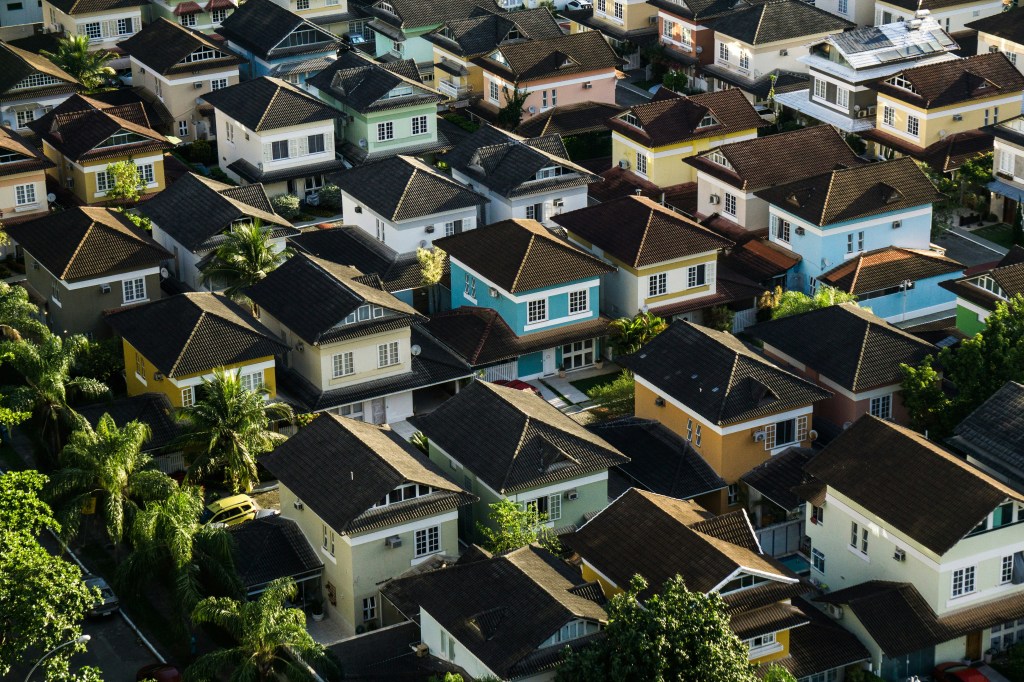
I was three the day Nancy came around the corner and knocked on our door. Her family was new to the neighborhood. She wanted to know if I’d come play with her daughter. So, I went. And I cried the entire afternoon, the way a shy three-year-old cries in a house that isn’t hers, wanting my mother, wanting home. By every reasonable measure, it was a disaster. It started a friendship that has lasted fifty years.
That’s the street I grew up on. I moved there when I was two and stayed until my dad sold the house after my mom died, which means that one street holds my whole childhood, beginning to end, bookended by the two largest facts of my life: arriving, and losing her. But it isn’t the house I think of first. It’s never the house. It’s the people. How many of them there were. How alive it all was.
I still know their names the way you know the words to songs you learned too young to forget. Nancy and Tony and their girls. Dale and Dede and theirs. Paul and Sherry and their two. Jean and Joe. Jay and Mimi and their bunch. Parents and children and more children, a whole ecosystem of people who knew each other’s business and each other’s kids, whose front doors were open more than they were closed, whose children ran from yard to yard as though the whole block were one big shared house.
Because it was, in a way. Jean watched me after school for a while, and they had a piano, and I’d sit and pick out songs on it long before I had one of my own, borrowing the instrument the way we all borrowed each other’s houses, each other’s afternoons. Across the street at Dale and Dede’s house, an older girl did gymnastics in her yard, tumbling and arching like something out of a movie, and I would stand and watch her the way you watch magic, certain I was seeing something rare.
There were lemonade stands. There were Big Wheels roaring down the sidewalk. There were long summer games of playing house that lasted until the streetlights came on. There were so many of us that no parent ever quite knew whose kids would turn up on any given day, and no one seemed to mind.
And there were the block parties. Fourth of July, Memorial Day, the street bustling with activity. Music drifting from somebody’s speakers or Paul’s family playing their guitars. The adults with their drinks and their laughing, loose and happy in the warm evening. All of us out there together, the whole neighborhood at once, the grown-ups as woven together as their children were, dinner parties and card nights and couples who did everything as a group. Sometimes my family and Nancy’s would leave together altogether, to Tahoe, to Pajaro Dunes, two families braided into one for a few days at a time.
I remember the earthquake in 1989, the big one, every family in the strange still afternoon, finding each other, counting heads, making sure. That’s the thing I keep. When the ground itself came apart, the neighborhood gathered in the street. That is what a neighborhood was.
And they watched us, all of them, all the time. When I got old enough to start dating, the neighbor, Dale, directly across the street would flick the porch light on and off, on and off, a signal that it was time for me to get myself inside. I couldn’t get away with anything, because it was never only my parents watching. It was every parent on the block, a dozen sets of eyes on every one of us, and I understand now that all that watching was a form of love. The whole street was raising me. It never once struck me as strange. It was simply the water I swam in, and I thought the whole world was made of water like that.
It isn’t, of course. And a place like that doesn’t last, because nothing does. The names still come up, and when they do, they come with a quiet accounting that gets longer every year. That one moved away. That family is gone now. That one passed. The street is still there. The houses still stand, other people in the yards now, other lives filling the rooms. But the neighborhood I grew up in, the living thing made of those exact people, has scattered and thinned and faded. Some drifted to other towns. Some aren’t living anymore. The whole warm world that raised me has quietly emptied out, the way they do, one family at a time, until you look up one day and understand that you are one of the few people left who carries the whole of it.
My dad sold the house after my mom died. That was the end of my family’s time on that street. The two losses folded into one, the way they so often do. The house went when she did.
But Nancy and Tony are still there. Fifty years after Nancy came around the corner and knocked, fifty years after I cried all afternoon and didn’t want to play, they are still in the neighborhood. Still family, in every way the word actually means. I visit them. And every single time, I drive past the old house on my way to their door, this plain house on a plain street that was once, to me, the entire populated world, and I slow down a little as I pass it, and then I keep going around to their place.
So much of it is gone. I don’t pretend otherwise. But that door still opens, and the people behind it still know me, still knew me when I was three and crying. The whole street emptied out around us, over fifty years, and the very first thing it ever gave me is the thing still standing.


Leave a Reply